Reflections from MACH X on how AI is changing the economics of technology and why organisations should reconsider decisions they thought were settled.
When the economics change, so should the conversation
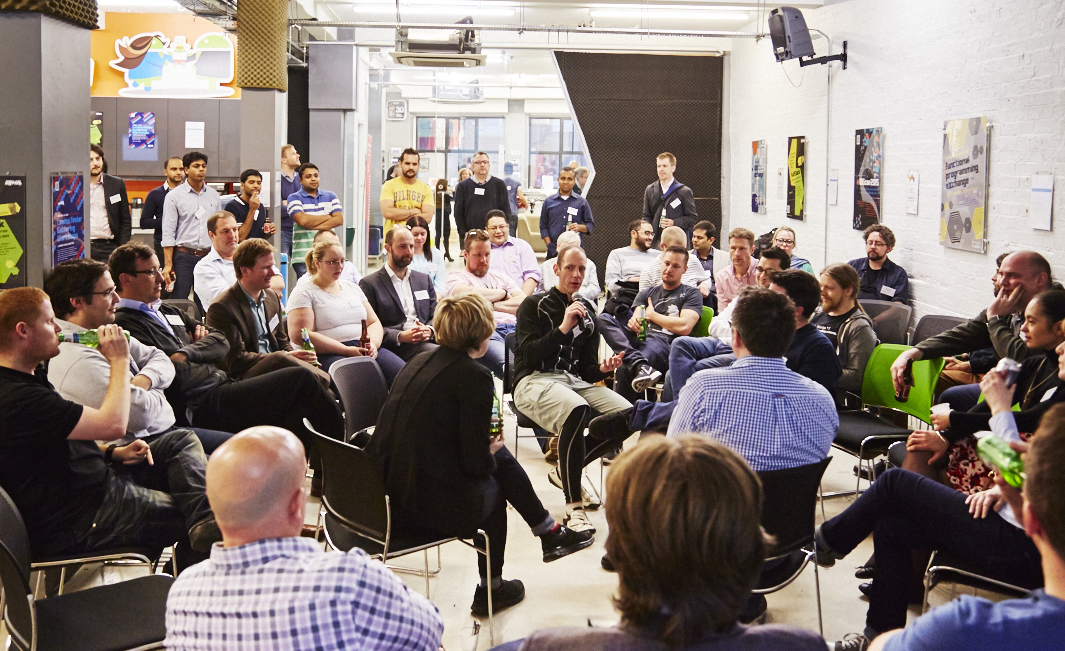
At MACH X, a discussion on Build vs Buy caught my attention.
One example concerned organisations reconsidering whether to build their own search capabilities, something that would traditionally have been more economical to buy. One participant acknowledged that without AI, they probably wouldn’t have considered developing their own solution.
What struck me wasn’t simply that building software has become cheaper.
It was that AI is making previously unattractive, impractical or even unimagined options worth considering.
And that raises an interesting question:
How many decisions across our organisations would we make differently if we were making them today?
What hasn’t changed, and what has.
In June 2025, Reda Hmeid and I explored these choices in Beyond Binary: A Modern Framework for Build vs Buy Decisions.
Our argument was that Build vs Buy is rarely a binary choice. The right decision depends on business context, competitive differentiation, organisational readiness, risk and the long-term consequences of ownership.
We encouraged organisations to challenge assumptions, understand their landscape and make informed, reversible decisions.
Those principles haven’t changed. But some of the assumptions we’re evaluating have.
AI is reducing the cost of understanding systems, exploring alternatives and building software. Approaches previously dismissed as uneconomical may now deserve serious consideration.
This doesn’t automatically make building preferable to buying. Maintenance, support and ownership still matter.
But it changes the options available, the cost of exploring them, and potentially the conclusions we reach.
Our earlier thinking encouraged organisations to establish checkpoints for reassessing decisions. Perhaps AI should now prompt us to revisit decisions where we never anticipated needing another checkpoint.
Three signals from MACH X
The conference discussion offered several examples of established assumptions being challenged.
What we buy. The search example illustrated how AI is shifting Build vs Buy economics. Capabilities previously considered too expensive to develop internally may now be viable. But participants also highlighted that cheaper implementation doesn’t necessarily mean lower total cost once maintenance, support and ownership are considered.
How we build. Another participant described using AI to create short-lived digital experiences that might exist for only six months. Traditional delivery approaches could make such investments uneconomical. AI invites us to reconsider how much engineering investment different solutions require, proportionate to their lifespan, risks and consequences.
What we own. A particularly interesting discussion concerned SaaS vendors introducing their own personalisation and customer intelligence capabilities. One participant questioned whether organisations should retain that intelligence centrally, rather than duplicating it across products. While not driven by AI alone, it challenges established architectural boundaries as the landscape evolves.
Three examples, but a common theme: decisions that once seemed settled are becoming worth questioning again.
Reduce cost. Reduce drag. Reimagine.
I see three opportunities emerging from this shift.
Reduce cost. What are we still paying for because alternatives were historically too expensive? Software licensing, vendor dependencies and existing investments may deserve another look as implementation economics change.
Reduce drag. What complexity have we learned to tolerate because removing it was previously too difficult? Temporary workarounds become permanent processes, dependencies become accepted constraints, and teams spend increasing amounts of effort navigating complexity rather than creating value.
AI can help us understand and remove that complexity, rather than simply automate our way around it.
Reimagine. Perhaps the most interesting opportunity is discovering possibilities we never seriously considered.
What customer experiences, operating models or architectural approaches have we dismissed because they were too expensive, complex or difficult to coordinate?
Reducing cost and drag improves what we already do.
Reimagining challenges whether we should be doing it that way at all.
Which decisions deserve another look?
This doesn’t mean reopening every decision we’ve ever made.
I’d start by looking for three signals:
- Cost without differentiation. Are we paying a premium for capabilities that no longer provide distinctive value? Have alternative approaches become more economical?
- Accepted friction. Where have workarounds, handoffs or dependencies become so familiar that we no longer question them? Could we now remove complexity previously considered too expensive to address?
- Unexplored possibilities. What have we dismissed as impractical, or never considered at all, because experimentation was too costly?
These are signals to investigate, not reasons to immediately replace something.
And some decisions may be harder to recognise. They’re buried in code, processes, organisational structures and years of accumulated workarounds.
We don’t revisit them because we no longer recognise that a choice exists.
A process requiring several approvals might have been designed to compensate for information that was difficult to access. An architectural dependency might exist because alternatives were prohibitively expensive.
What we now regard as a constraint might actually be the consequence of an earlier decision.
AI can help expose these assumptions, reconstruct business knowledge and explore alternatives.
But before committing to change, we should understand why the original decision was made, which constraints still apply and what new risks an alternative introduces.
Then form a hypothesis and test it.
Could we reduce total cost of ownership? Remove a dependency slowing delivery? Create value through an approach that wasn’t previously viable?
Sometimes the right conclusion will be to change nothing.
A decision is worth revisiting when its assumptions have changed, the potential value is meaningful, and the cost of learning is justified.
Are we making space to explore?
There’s another question worth asking: Do we actually create the space to reconsider these decisions?
Many organisations are consumed by delivering the next feature, meeting the next deadline or responding to the next priority.
We’re constantly moving. But how often do we make time to question the direction?
This connects closely with something we’ve been exploring at Equal Experts: AI is reducing the cost of software execution faster than many organisations can adapt their decision-making.
If every available hour is committed to execution, when do we examine the assumptions shaping that execution?
This doesn’t require a large transformation programme. It might simply mean creating deliberate opportunities for teams to challenge constraints, explore alternatives and test hypotheses.
Ironically, some of the capacity we’re hoping AI will free up could be invested in discovering work we no longer need to do.
If AI gives us the ability to move faster, perhaps we should invest some of that advantage in deciding where we should be going.
Are we ready to challenge yesterday’s decisions?
Much of the conversation around AI focuses on what we’ll be able to do next: new capabilities, faster delivery and more automation.
But MACH X reminded me that some of the most interesting opportunities may already be hiding within our organisations, behind decisions that were perfectly reasonable when we made them.
The danger is becoming so focused on accelerating execution that we never question what we’re accelerating.
We automate processes without challenging why they exist. We build agents to navigate complexity we’ve learned to tolerate. We make existing solutions more efficient without asking whether we’d still choose them today.
We risk using tomorrow’s technology to reinforce yesterday’s decisions.
Perhaps genuine AI transformation starts by challenging the assumptions we’ve stopped questioning.
But that requires something technology alone can’t provide: the willingness to create space to explore, reflect and challenge our direction.
Because the question isn’t simply what AI now enables us to do.
It’s whether we’re prepared to make the time to discover what we should be doing differently.
About the author
Dave Sammut is a hands-on technical architect who bridges business and engineering to ensure alignment from vision to execution. He works across all levels of an organisation, from senior stakeholders to developers, driving clarity, reducing risk, and promoting technical excellence.
With a strong focus on delivering AI solutions responsibly and effectively, Dave helps teams navigate the complexity of integrating AI into real-world systems. His approach blends modern engineering practices, including Domain-Driven Design, Hypothesis-Driven Development and Infrastructure as Code, with close collaboration and rapid iteration to ensure tangible, data-driven outcomes.
Dave prioritises learning, experimentation and value delivery from day one, ensuring AI initiatives are grounded in both strategy and practicality.
Connect with Dave on LinkedIn