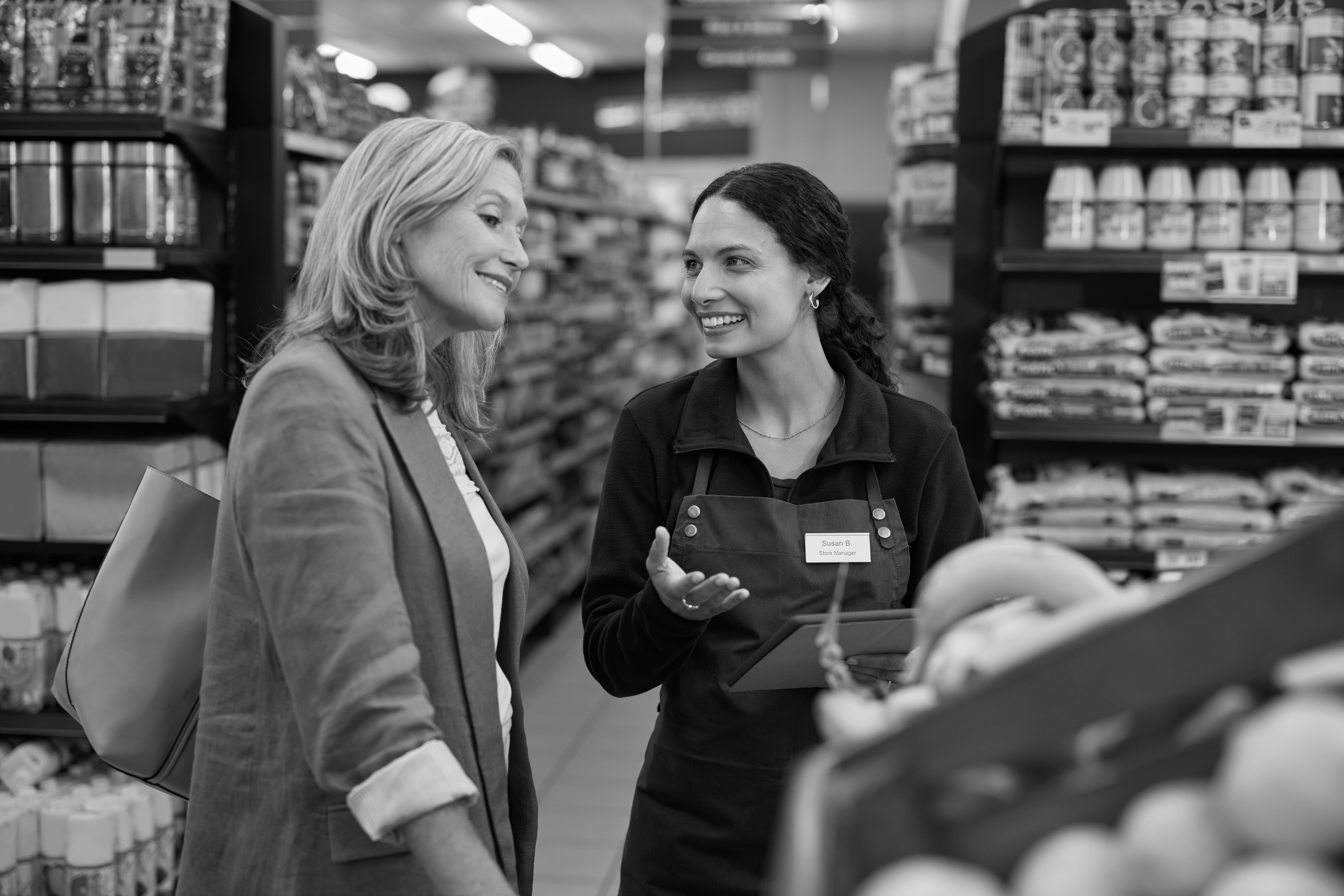
The role of physical retail is constantly evolving, with major UK Retailers planning on investing billions in physical space, distribution, technology and omnichannel infrastructure in 2026/27
Emma Payne, Senior Advisor at Equal Experts, sits down with principal consultant Matthew Rathbone to discuss robotics, back-end foundations and where retailers can deliver real value on their investment into store technology and experiences.
Emma: We can see a significant commitment in expanding physical space and experiences. But can technology deliver on this ambition?
Matthew: If you want advice on store layouts, I’m the wrong person to ask. But we’re at a fascinating inflexion point technologically, and it’s going to totally transform physical retail.
For 20 years or so, technology has given us back-office efficiency – automating administration, streamlining supply chains and shaving a few pennies off the cost of running a store. That still matters, of course, but what’s exciting now is that digitisation, AI and computer vision are letting us build things that retailers have dreamed about for years.
We’re now nearing the point where we could run fully digitised stores, where we can do things like offer live, personalised customer service on the shop floor via handsets and track inventory in real-time with sensor fusion. It opens up a world of possibilities, because the physical store can become dynamic, personalised and fully tracked.
Emma: So are we now seeing a step change in automation directly on the shop floor?
Matthew: Absolutely. You’ve already got autonomous floor cleaners and shelf-scanning robots trundling around stores. The idea of humanoid robots that can stack shelves or move stock doesn’t seem like a sci-fi pipedream any more – in fact, many of those things are already being tested in live demos.
I think we’re seeing a step change in capability – and that’s important because physical retail matters just as much as ever, even though online shopping continues to grow. Physical stores still capture around seven of every ten pounds spent in the UK.
Emma: So real value remains in omni-channel experiences for customer convenience, but stores are vital in developing loyalty and brand recognition?
Matthew: Exactly. Online shopping is growing but becoming more impersonal. Social algorithms decide much of what we see before we’ve even started searching for it, and autonomous agents will soon be able to do our shopping for us. Retailers have mountains of customer data, but far fewer transactions involve a real conversation.
Physical stores are the one place left where brands can choose to put a human being in front of a customer – the million dollar question is where does that human touch actually add value?
Emma: How can retail leaders decide where to automate and where to keep people front-and-centre?
Matthew: Anyone selling a one-size-fits-all model is leading you down the garden path, because there isn’t a single playbook here. If you’re a discount grocer, your customers want fast, slick service and the lowest possible price, but if you’re a premium, specialist retailer, then deep product expertise and assisted selling might drive basket size and loyalty. Both models are commercially sound.
Regardless of where your brand sits on that spectrum, the truth is that you still need robust back-end data foundations. That clean data layer powers everything—from loss prevention and automated replenishment to giving staff an iPad that actually tells them where a dress is in the stockroom.
Emma: If you were sitting with a retail board planning their 2027 capital expenditure right now, what’s the most important question they should be asking?
Matthew: I’d tell them to stop asking, ‘How do we automate the store’ because you’re jumping to a technical solution before doing the strategic thinking. Don’t automate the current operation when advanced technical capabilities exist that could transform how you deliver the physical experience to customers.
That means the question that’s really worth asking is, ‘For our specific brand, customers and product category, where does human interaction drive margin and loyalty, versus creating friction?’
Equal Experts is Strategic Sponsor of the FT Future of Retail Summit, taking place on 6 October 2026 in London and online. Discover more at retail.live.ft.com.
About the contributors
Emma Payne is a digital transformation and technology executive with over 25 years of experience across retail and the private sector. She has held senior leadership roles including Global Director of Technology and Product at John Lewis & Partners and Pret A Manger, reporting into the Executive Board. She has deep expertise and a proven track record in digital transformation, technology strategy, customer experience and AI adoption.
As a long-standing customer of Equal Experts, Emma joined the advisory team in 2023. She now works with senior leaders and high-performing teams on strategic planning, complex transformations and building lasting partnerships that deliver measurable business value.
Connect with Emma on LinkedIn.
Matthew Rathbone is a Retail Technology Strategy Consultant who joined Equal Experts in 2025 after 20 years in retail and FMCG, including Cadbury, Tesco, and Sainsbury’s. Matthew specialises in establishing and leading major technology-enabled, operational change programmes, building the governance, strategy, and stakeholder engagement needed to deliver lasting value.
Connect with Matthew on LinkedIn.