Most quality talks assume you’ve got a QA team, a test framework someone already built, and headcount to spare. But what happens when you don’t have that safety net? How do you build and maintain quality in a small but fast-moving team, while you’re building the product from the ground up?
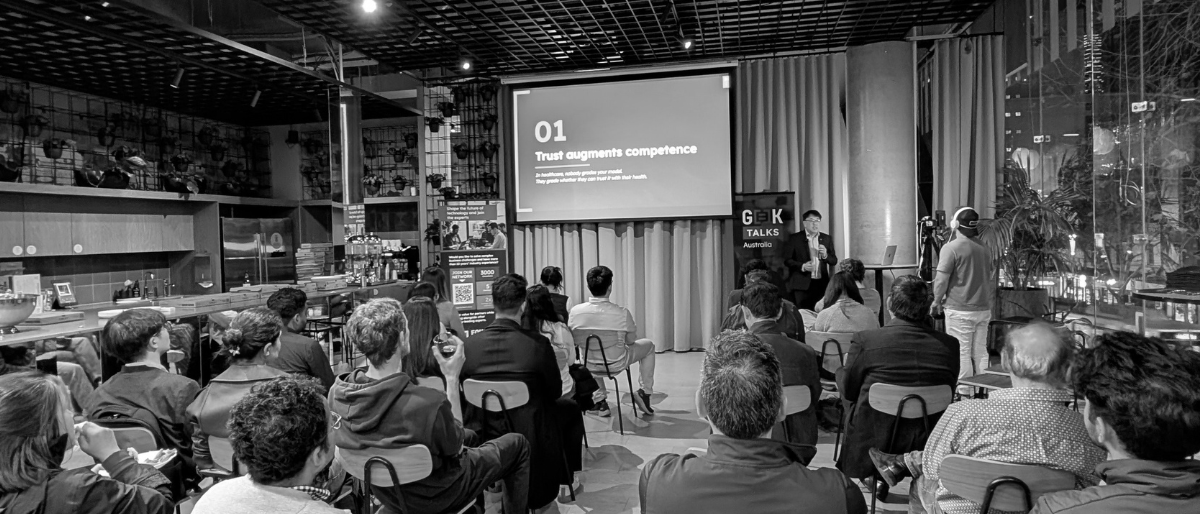
At our latest G-EE-K event in Sydney, Sam Connelly, Principal Quality Consultant within the Equal Experts network in Australia, shared her experiences of doing just that. With more than a decade in tech and now as the Financial Literacy Lead at Canwi, Sam understands how a small startup team builds and maintains confidence in what they ship without a traditional quality safety net.
Why testing matters and what actually needs testing (or doesn’t)
When you’re building a financial tool like Canwi, getting the numbers wrong can have life-changing implications. If calculations fail or models miss complex financial rules, someone’s retirement plan could collapse, leaving them struggling with inadequate finances when they should be enjoying their later years. When users are making big life choices based on your product, earning and keeping trust is everything.
That doesn’t mean lean startups need to follow traditional test pyramids or write thousands of unit tests. Sam argued that teams can throw out rigid models if they don’t serve them, creating their own model for quality if that’s what they need.
Crucially, every test carries a maintenance cost, such as hardcoding a base year that later requires hundreds of manual updates. AI can generate thousands of tests in seconds, but if they don’t provide useful feedback, they’re just instant tech debt. If a test no longer justifies its upkeep, delete it.
Unit tests and pragmatic BDD
The Canwi team started with unit testing, but quickly found the model would break at the integration point. Unit tests could check if income tax was calculated correctly for a particular circumstance, but would break when more complexity was added, such as family tax benefit or sale of a property that year. A simple question like “how much income tax do I pay? actually hides massive variance. So the team had to create a modern, robust model that would take into account this level of complexity.
The team then introduced a pragmatic approach to BDD, with human-readable test cases in Cucumber, helping to verify complex cases. It’s more involved than most early-stage startups require, but necessary for the model accuracy and trust Canwi requires.
Testing strategies when you’re on a tight budget
Operating as a lean team means being smart about where time and resources go. Sam offered some tactics that others can use when budgets are tight.
- Bugbash: Before a big release, get the team together in a room, set up a regression testing framework and run through it together.
- Mocking framework: Simulate the behaviour of real dependencies (like databases, APIs, or external classes) by creating isolated, fake objects for testing. As a bonus, this fake data is great for building safe marketing demos.
- Soap opera: Brainstorm some of the weird, ridiculous things someone could try to do with your product as if they live in a soap opera. What would happen if someone won the lottery or had been legally declared dead, but turned up again years later? Can your product handle it?
- Risk-based framework: Map features based on impact to the customer if broken vs frequency of use. Focus testing efforts on those that would cause the biggest impact most frequently to make the most of time and resources where they’ll have the biggest return on investment.
Where we’re headed: AI agents and testing partners
Finally, Sam also shared some early experiments using AI in the quality and testing process. This includes prototyping autonomous AI agents that continuously walk the application end-to-end, looking for crashes. If an agent gets stuck on an element, it automatically opens a pull request adding the required accessibility labels to fix its own path.
Another opportunity is using Claude Code as a testing partner. Rather than treating LLMs solely as code generators, Sam shared how she’d used AI to capture screenshots, document bugs and share them with the dev team to help speed up the process.
Join our growing technology community in Australia
We’d like to thank Sam for sharing her experiences at our recent G-EE-K talk. G-EE-K, also known as G[=]K, is Equal Experts’ technology event series. More than just talks for technology practitioners, they embody our core values of knowledge sharing, fostering communities and uplifting individuals with new skills or capabilities that they can take back to their own organisations.
Missed out on this G-EE-K talk? Watch out for details of future events in Sydney and Melbourne. If you’re interested in learning more about Equal Experts or our Network, contact the Australia team now.
About the author
Prasanna Murugavel is Head of People and Community at Equal Experts APAC. With more than 20 years of experience in global HR, Prasanna is a hands-on people leader committed to achieving organisational success and accelerated business growth. Connect with Prasanna on LinkedIn.