

Want to know more?
Are you interested in this project? Or do you have one just like it? Get in touch. We’d love to tell you more about it.


There are currently an estimated 138m children in Child Labour, 54m of whom are working in hazardous conditions. The best way to reduce these numbers, and drive systemic and sustained change, is to make the issue of Child Labour more visible and transparent, and surface objective sources of evidence so that companies can be held to account.
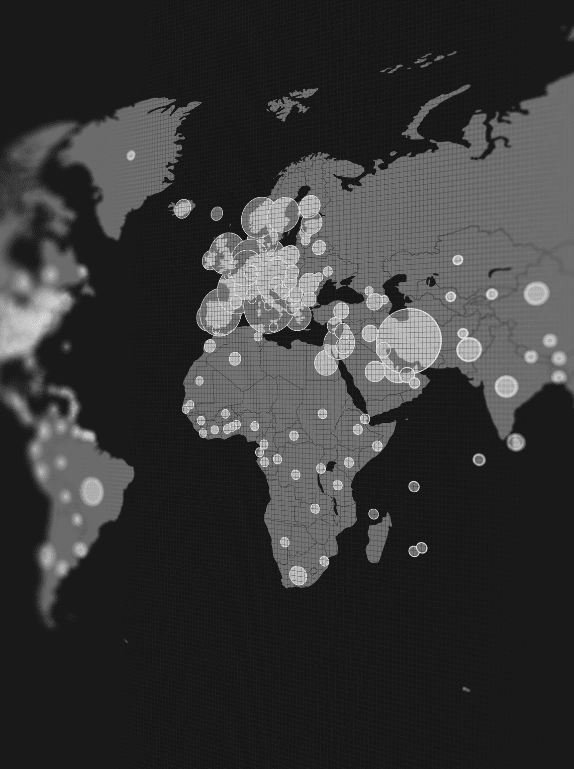
Through the innovative application of Machine Learning (ML) and AI, HACE have created the world’s first Child Labour Index (CLI), which scores all publicly listed companies – over 36,000 in total – against key criteria. The resulting insights provide companies and investors with what they need to identify Child Labour risks in business practices. By providing both rich data and expert guidance, HACE is playing a pivotal role in facilitating a more informed conversation about Child Labour.

companies assessed globally
children affected worldwide
global leaders recognised for transparency
HACE is a female-founded and led tech start-up, based in Manchester, with a simple aim: to build a world without Child Labour, by driving collaborative action, protecting business value and creating meaningful societal change.
In October 2025, HACE launched their first annual Corporate Child Labour Benchmark, a tool designed to highlight best practice in the corporate governance of Child Labour. Their unique methodology lists the top 25 companies on the Child Labour Index, and evaluates what and how leading companies are disclosing about their efforts to tackle the issue in their supply chains.
The Benchmark highlights the importance of open disclosure, acknowledging those companies who are demonstrating a commitment to managing Child Labour risks openly and as a standalone issue, alongside Forced Labour. The 25 companies listed in the 2025 Benchmark have taken a proactive and collaborative approach to Child Labour in supply chains, which is ultimately the best way to deliver more sustainable outcomes for all stakeholders – especially children themselves.
You can listen to Eleanor Harry, HACE’s award-winning CEO and founder, talking more about HACE’s mission here.



HACE exists to make a lasting difference to a complex, emotive issue, by translating the founders’ experience in sustainability and supply chain issues into a scalable, technology-driven product that provides value to all publicly listed companies globally.
HACE’s leadership team knows that there is a causal link between greater awareness of Child Labour and the improved management of related risks in supply chains. However, achieving this outcome and making it stick is far from simple. Unlike credit ratings, which have decades of standardisation, there is no precedent for benchmarking Child Labour risk at scale. Data on Child Labour is typically difficult to access, inconsistent, and low quality. Moreover, it requires nuanced and subtle interpretation, shaped by years of expertise.
HACE’s approach is based on the translation of large volumes of structured and unstructured data into actionable insights, via architecture that can be cost-effectively scaled to accommodate new data sources and other factors, such as regulatory complexity. Building a business of this kind wasn’t just a technical challenge: it was an ethical, methodological, and conceptual one.
Initially, HACE engaged Equal Experts to help with two issues in parallel:
Equal Experts also wanted to help enhance HACE’s Product and Engineering capabilities. Before the team landed, HACE were working in a broadly Agile way, with most people wearing multiple hats, as is often the case in start-ups. This made for an open, if often hectic and demanding, culture. Our brief encompassed promoting excellent ways of working, and leaving behind a positive and lasting legacy in terms of capability. This was primarily achieved through pairing, embedding consultants in blended teams, and taking an intentional and deliberate approach to skills transfer.
During our time working with HACE the commercial realities were unforgiving, the deadlines were tight, and the selling cycle was extended, because the CLI and other aspects of HACE’s product portfolio comprised a novel (if vital) market proposition. The business environment was inherently fast-paced, and the challenges of working in an ever-changing area were exacerbated by the inevitable ups and downs of the start-up world.
While the journey was longer and tougher than first anticipated, the products and services offered by HACE today reflect the lessons learned along the way. Throughout the engagement there were robust discussions of the risks and emerging challenges in the market, and how to best overcome them, such as ‘ESG Fatigue’ and anti-ESG activism in the modern international political climate. This led to discussions about how HACE and the Child Labour Index (CLI) could play a pivotal role in influencing governments and major NGOs like the UN on future iterations of Child Labour regulation and legislation.
Therefore, the launch of the Child Labour Index didn’t just represent a technical milestone, it was a first-of-its-kind product that helped governments, investors, companies and others better understand the risk of child labour in global supply chains.
A full review of the product/market fit and go to market strategy for the CLI helped HACE’s leadership team explore the possibility of diversifying their offering, by considering how the addition of a high touch consultancy business, separate from and in addition to the CLI, would comprise a solid, alternative path to value.
This thinking eventually led to the launch of the Corporate Child Labour Benchmark, which allows publicly listed companies to gain an objective perspective on the effectiveness of their actions on Child Labour for the first time. This means that decision-makers at the world’s largest companies can make better sense of this vital, ever-changing social issue.
Finally, we advised on how HACE might pursue a membership model, which led to the establishment of the inaugural Child Labour Working Group. To shape the approach, HACE conducted a multi-stakeholder roundtable, with attendees expressing strong support for the idea. While the ultimate structure will be co-created with the members, the aim is to bring together a diverse range of experts to share data, knowledge, and insights in order to create actionable roadmaps and tangible takeaways.
The next step is to gain a better picture of interest from potential members to help finalise the scale and logistical details, including the full benefits of membership. If you would like to register your interest, fill out the survey here.

HACE, supported by Equal Experts, have created a new way of holding the private sector accountable on the issue of Child Labour. Many lessons were learned throughout the process, but the main headlines are:
This work demonstrates for us the power of flexible delivery, iterative product thinking and – above all – humility.
“It was never about tech for tech’s sake. It was about applying innovation to an entrenched and complex problem – something that’s been ignored for too long. The trick was marrying our expertise with Equal Experts’ ability to translate it into a commercially viable set of products and services.”
Are you interested in this project? Or do you have one just like it? Get in touch. We’d love to tell you more about it.